Tuesday, 13 March 2012

Studying in Southwell, Shakespeare in Stratford

On February 28th, everyone was divided into two large groups based on when they have British Studies, and ushered either onto coaches or into the long gallery for the first part of our "Victorian Archiecture: How buildings can reinforce the ideas of class and gender."  That was not the actual name of our trip, but that was idea. As I was in the first group to visit Southwell, I bundled up and headed out.
 This is Southwell workhouse.  It is the first and last of its kind, as the rest have been torn down or turned into apartments.  It is divided into six sections: Able bodied men and women, old and infirm men and women, children, and the master/martron areas.  The only time they mixed was Sunday worship and families could meet Sunday evening if everyone was good during the week.
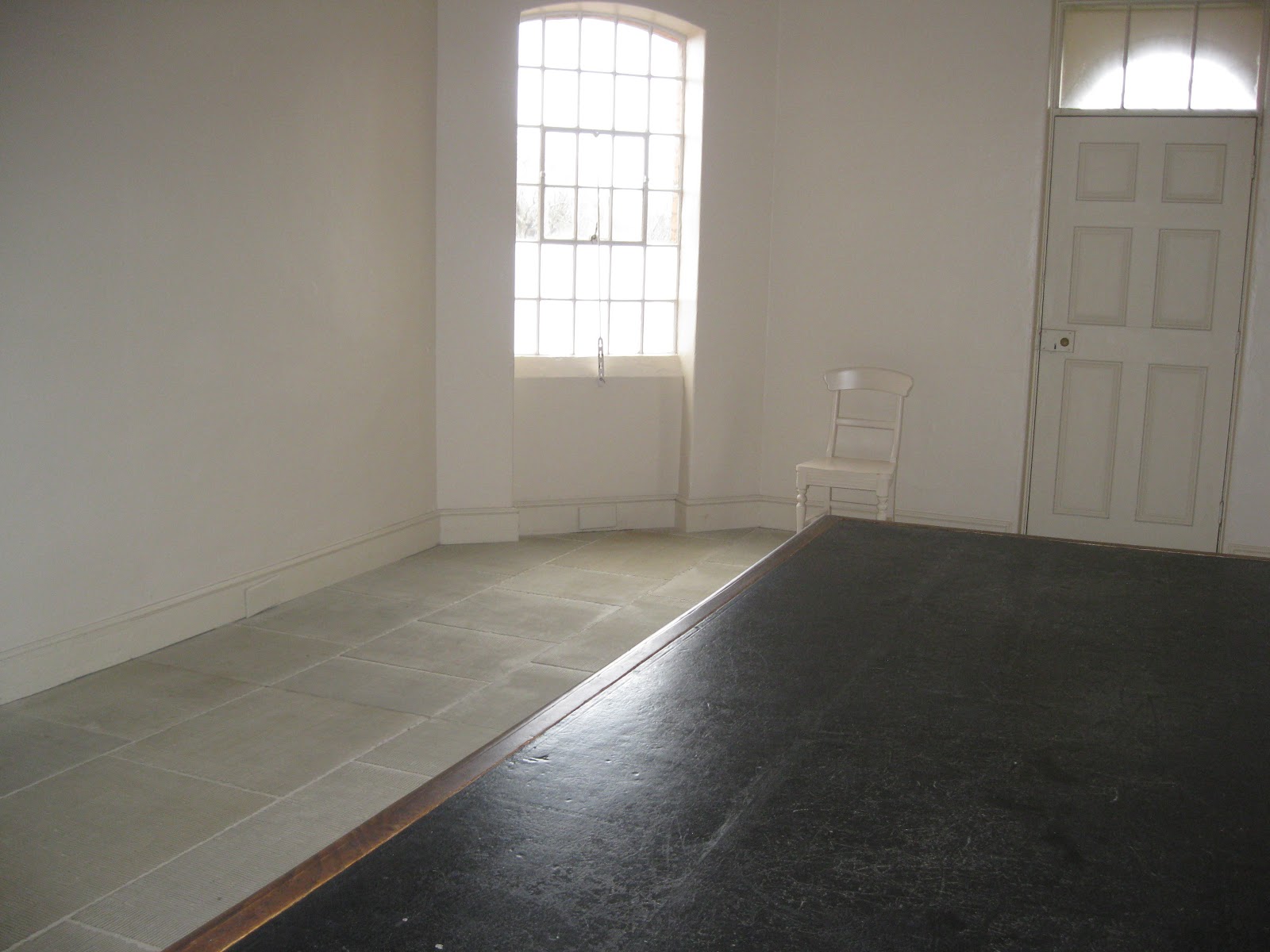
 This is the room where Sunday service was held, along with where the Committee met to make sure the workhouse was serving its purpose.
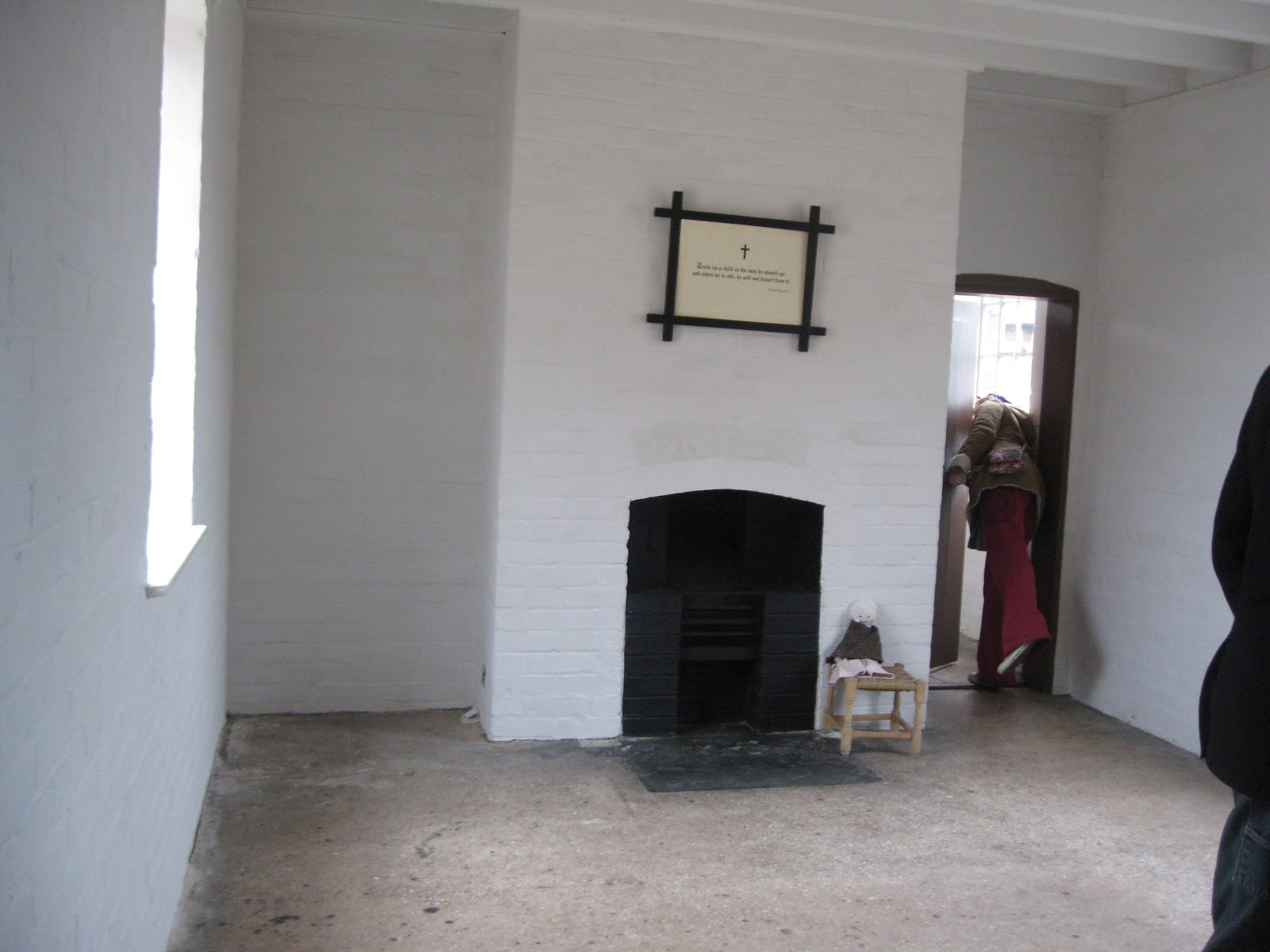
 This is the girls' bedroom, where they were locked in at night.  Everyone was locked in at night to prevent people from wandering around and getting into mischief.
 These are not the actual beds, but they would have been this size and everyone slept double to allow for more room.
The cellar where the women worked preparing and storing all the food.  It was cold, and aparently during the rainy winters they were stuck standing in ice cold water up to their ankles. 
After we returned from the workhouse for lunch it was time to analyze the place we all currently call home: Harlaxton.
Alright, so there was no fog or snow that day, but I didn't want to reuse any pictures.
 The governess had a fairly nice room.  Shame there was never a governess.

 This is the old library, where the professors can go have a stiff drink and talk about the students.  At one point this room was used for séances by Mrs. Van der Elst because she wanted to contact her dead husband,
 This is one of the state bedrooms, taken as the housekeepers were cleaning.  This is why you should always carry a camera at Harlaxton.
 A better picture of the Ante room.
I wonder what it says about us that our library is where the kitchens used to be. 
The weekend rolled around and it was time for me to visit Stratford, the place of Shakespeare's birth.  It was nice, but it lacked the magic I was expecting.  Certainly the seven hours we had to do what we pleased was a little much.  But we made due.
 The coolest part about his birthplace was the inside, which I could not take pictures of.
 My inner geek liked this little shop because it connected Shakespeare with Harry Potter.
 Look, a pretty garden.  Actually has very little to do with Shakespeare. 
Shakespeare's grave with a sign so that people can see what he had inscribed on his tomb.  "Good friend, for Jesus sake forbare, / to dig the dust enclosed here. / Blest be the man that spares these stones, / and curst be that moves my bones."
Of course no trip to Stratford is complete without watching a play.  From the back row of the third level I watched a rather interesting take on Measure for Measure.
Although I still have one weekend to review before I am caught up, I shall leave this post as it is.  After all, with every picture worth a thousand words this post is just slightly over 16000 words long.

JClark. 

Tuesday, 28 February 2012

Back From Bath

This weekend I went many places without going very far.  After a two and a half hour drive from the manor, we arrived in the university town of Oxford.  Here we spent a good four hours wandering on our own.  I went along with one group to Christchurch to see the “Welcome to Hogwarts” stairs used in the first movie by McGonagall.  I also viewed the great hall that inspired the one in Hogwarts and the chapel, which was fairly interesting. 
Do you recognize these stairs?
The great hall, where the students still eat?
Look, floating candles - sort of.
The only figure of Jonah made of painted glass.
Spirit of St. Fridesworth (patron saint of Oxford) going to heaven.
The murder of Archbishop of Canterbury, Thomas Becket.  Very important event in England.

There was also a great deal of author stalking going on in Oxford.  While some stalked Lewis Carroll (Charles Lutwidge Dodgson), author of Alice in Wonderland, others still stalked J. R. R. Tolkien.  It was relatively easily since both authors worked in Oxford for a time.  In fact, when Lewis Carroll was working on Alice he was teaching in Christchurch college, and the dean's daughter was named Alice.  I joined up with the Tolkien stalkers and visited one of Tolkien's favourite pubs and his house. 
Well, actually Tolkien and C.S. Lewis both frequented this post, dubbing themselves "The Inklings" and naming the pub Bird and Baby.
Certainly not where I would have expected Tolkien to live. 

After Oxford, we continued onto Bath, where we stayed in a hostel on top of a hill overlooking the city.  After all the other hotel locations being closer to the city, I had to wonder why a hostel and why so far away.  Hostels are interesting places; my room had 10 beds in it, all bunks.  The bathroom had three shower stalls and three toilet stalls, and were unisex (I guess).  That means we were sharing the bathroom with at least one guy. 
Rooms in hostels are also co-ed, but the college made sure to keep it one gender to a room.  I guess if you rent out a room completely with your friends, it will also be one gender.  While a few friends and I talked on the first night, a guy walked into the room, thought nothing of the female voices, and then realized that he was in the wrong place. 
The fog descends on our first night in Bath.
The next morning we rose and took a trip to Glastonbury Abbey, the legendary resting place of King Arthur.  Several of the students went up the Tor (Celtic for hill), the legendary location of Avalon.  I stayed at the base of the hill and discovered the healing properties of the Chalice Well, another Arthurian place of legend.  This included bathing in and drinking said water. 
The Healing Pool inside King Arthur's court.  The pool is from the 18th century.
The fountain feeding the pool.
Glasses provided so you too can drink the healing waters.
Bottom's up, it is only filled with iron.
The actual well that does not feed the rest of the spring.
Tor and the 15th Century tower of St. Michaels, that is totally not from Arthur's time. 

After returning from the well, I found Arthur’s grave and burial site, and explored the ruins of the abbey.  After seeing the other grand churches of Britain, it is not hard to imagine the splendour that would have been Glastonbury Abbey. 

"This food is a s ancient as the Abbey - please do not eat" This sign makes me giggle.

We returned to Bath, and after a bird decided to play target practice with me, I decided an early shower and a relaxing afternoon was just what I needed.  I spent the rest of the afternoon in the hostel, but I grabbed a few great shots of Bath from a bench on my hike up the hill.
This is what Bath looks like for the most part.
Bath from a bench part 1.
Bath from a bench part 2.

The next morning the coach took us down to the city centre where we wandered around the Roman baths.  It was interesting to see everything they had set up there to talk about the history of the baths.  I did not touch the water, though I know a few people who did. 
While waiting for the baths to open, I studied the abbey next door using skills gained in Lincoln.
Looks like a king over the main doors.  Church = State.
Look, angles are climbing Jacob's ladder. But is the ladder between Saints or Kings? 
Oh, but that is a demon climbing down the ladder.  
Three different family crests.  Hmm, the families that contributed most to the building of Bath Abby?
Where the romans used to bath.  
The head of Sulis Minerva, the goddess the temple was dedicated to.  
The one place you are allowed to throw money into.  I added my two pence.

We left Bath and went to Stonehenge, which I suppose needs no introduction.  The archaeology majors and minor’s I was with were extra excited, and everyone else just wanted to see the iconic stones.  Certainly, the structure was interesting, but I was a little disappointed at the size.  I imagined them to be larger. 


We made a short stop in Salisbury on our way back to Harlaxton from Stonehenge, seeing the Salisbury cathedral – Cathedral of Saint Mary – that has the largest spire in the UK, the largest cloister, the oldest working clock, and a very well preserved copy of the Magna Carta.  I did not actually visit the cathedral, but I did find this interesting building.

After lunch, we piled back onto the coach and made our return to Harlaxton without any more delays, arriving at 6:30 with 30 more minutes left of dinner.  Back to classes, schoolwork, and a quiet bedroom.
JClark